|
I've been thinking about Ray and Diane all week.
They're clients of ours, a few years out from retirement. For most of their lives, they told themselves they didn't have enough to retire. They'd spent so long saving that even when the numbers looked good, they couldn't take the leap.
When they came in to talk with us, they braced for a conversation about closing their savings gap. Instead, we ran the numbers together and found there wasn’t a gap to close.
They weren't going to run out of money.
They had more than they'd ever need and no plan for where the rest should go.
You’re probably closer to Ray and Diane than you think. One study found that nearly half of retirees still have 80% or more of their savings twenty years after they retire. That's a lifetime of work just sitting there.
Having more than enough sounds like a good problem to have, and with the right plan, it can be.
Think of their situation like a cup that fills up faster than you can drink from it. If nobody decides where the overflow goes, it doesn't just sit still.
It spills over.
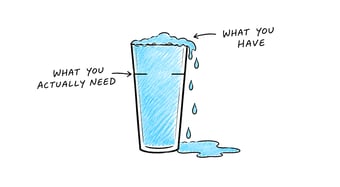
In this case, the overflow is money left over once your own retirement needs are covered. And the same spill happens to your legacy when your account is left unchecked.
The good news is that overflow can go toward the things that matter most to you, if you point it there on purpose.
So, I want to show you a different way to think about the nest egg you've built. I'll send a couple of short emails each week, five in all, and we'll walk through the places your overflow can go, one at a time.
The idea comes from a book I love, Die with Zero by Bill Perkins. Honestly, it's one of the most encouraging things I've ever read about creating a meaningful life worth saving for.
At its heart, the idea is about using what you've earned while you're still here to enjoy it, and putting it toward what actually makes your life full.
Perkins puts it best, encouraging you to “realize that at every moment you have a choice. The choices you make reflect your priorities, so be sure you're making those choices deliberately."
If your money outlives your need for it, who decides where it goes?
Picture yourself ten years from now with more saved than you'll ever need. Where would you want that extra to go?
-Helping out the kids?
-Supporting a cause you care about?
-Splurging on season tickets?
Whatever comes to mind, that's your decision waiting to be made.
In my next email, we'll look at how to keep your overflow out of the IRS's hands, so more of it can go where you want it to. And by the end of this five-part series, you'll be the one deciding where every extra dollar goes.
Talk soon,
Tim

Tim Meisenheimer, CFP®, CFA
CEO, Streamline Financial
P.S. If this idea sparks something and you'd like to go deeper before my next email, here's the book. I don't earn anything from recommending it. I just think it's worth your time.
|
