.png)
|
Thanks for being part of the Streamline Financial community. My name is Tim, I’m the owner and CEO here. You probably joined this email list from watching one of our YouTube videos. Oftentimes our videos can only say so much, so I wanted to start a journey with you here where we can go deeper into the subjects that matter most when planning your retirement.
Over 18 years, I've worked with hundreds of people in your situation, and the ones who end up the happiest treat the years before retirement like an intense mountain climb.
What I mean is that it requires preparation. It requires planning. And it takes time.
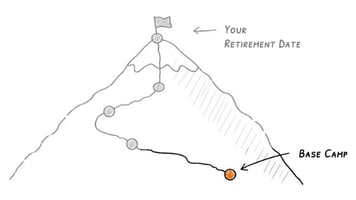
Reaching your retirement date takes the same kind of dedication and preparation it takes to summit the tallest mountain in the world, Mount Everest. I love how Jon Krakauer describes the climb in his book, Into Thin Air.
Every climber who has reached Everest’s summit started in one place, base camp. And in reality, that’s higher than most people will ever go.
That’s exactly where you are now. You aren’t starting from zero.
You’ve already done the work to get to base camp.
Now it’s about focusing on the final push to the top of the mountain, or in this case, your retirement date.
Every successful summit needs a guide who knows the route. Over the next five days, we’ll stop at five checkpoints on our way up the mountain, each built around a single question, and by the time you reach the top, you’ll have a personalized map to reach your retirement date. |
 |
|
While most people try to rush to the summit, the most confident retirees pace themselves, working through these five questions along the way. The questions may surprise you, and I’ve found that most financial advisors aren’t properly trained to help with this.
|
 |
|
That's why I created this framework. It's to help you discover the same clarity you already have (or are building) for your finances, and apply that financial confidence to the other areas of your life. And I've seen it work firsthand.
One client in particular comes to mind. Charlotte worked with another advisor for years, but still didn't trust her plan enough to let go of the two part-time jobs she was using as an emotional safety net. Once she had a plan she could believe in, she let both go. Now, she finally has enough time to enjoy her grandkids.
When we met with her, she said, "Wow, I thought I was going on a coffee date, and you just served me a steak dinner!" Needless to say, Charlotte couldn't be happier with her decision to finally retire. —
Today, let's start with a foundational question, one we'll build off of for the rest of the week.
What will an ordinary day of retirement look like for you?
I know this seems weird, but think about the people you want to spend your days with, where you want to be, or what you want to be doing. What will a random Tuesday look like for you?
The answer to this question might be more important than your asset allocation, your withdrawal strategy, or your rebalancing strategy.
You’re approaching a chapter of your life where you’ll have more money and time than ever. That’s not something to take lightly or leave to chance. If you have kids, imagine your kids or grandkids. What if they had unlimited time and a good amount of money, and they were just “winging it”? Now there’s your motivation to get started today.
So take a moment to write down your answer. Make sure it’s somewhere you'll actually see it again, your Notes app, a physical notebook, a sticky note on your desk...
It doesn't matter, just write it down.
Set it aside, and reread it tomorrow morning before you open the next email. See if it still feels true, or if something shifts with the new day.
If you’re married, I'd encourage you to do this exercise separately. Then bring together your lists, and define what activities you’ll do together, and which ones you’ll do separately. It’s actually good to have a little of both.
I’m glad we get to make this climb together. More tomorrow, |
 |
 |
|
Tim Meisenheimer, CFP®, CFA |